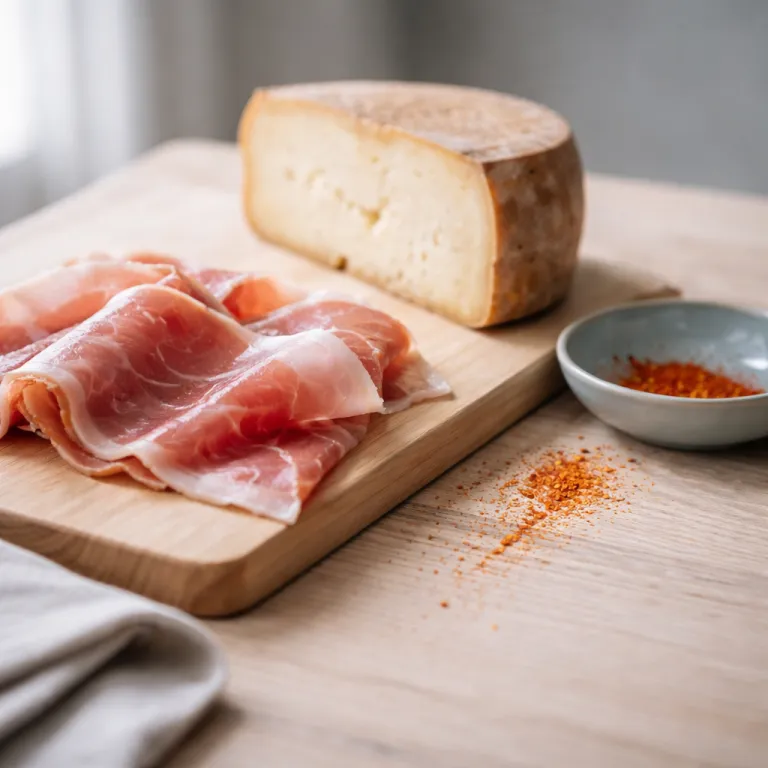
Why a basque country food guide starts with three iconic products
Bayonne ham, Espelette pepper and Ossau-Iraty form the quiet backbone of any serious Basque Country food guide. They are not just famous foods from northern Spain and south-western France; they are a living syllabus in how a country understands generosity, patience and pride. For families planning a luxury trip, these three products explain why Basque cuisine feels both elevated and disarmingly local at the same time.
Bayonne, in Nouvelle-Aquitaine, anchors this Basque Country narrative with its curing houses and markets where Basque farmers and local artisans still work side by side. Traditional curing and aging rely on Salies-de-Béarn salt, cool air and time, which means every slice of ham on your plate in a Michelin-starred dining room or a simple bar tells a story of restraint and care. When you book a premium hotel in Aquitaine, ask the concierge to arrange a guided visit to a ham producer such as Pierre Ibaïalde in Bayonne or Atelier du Jambon de Bayonne in Saint-Etienne-de-Baïgorry, so your children see how traditional Basque methods turn raw meat into one of the best dishes in Europe.
Espelette pepper and Ossau-Iraty complete this Basque Country food guide triangle with colour and texture. The Espelette pepper, introduced to the region centuries ago, now hangs in garlands across village façades, signalling a cuisine basque that prefers warmth to aggression and perfume to heat. Ossau-Iraty, a sheep’s milk cheese that has been recognised several times among the world’s best at the World Cheese Awards, shows how Basque chefs and cheesemakers use simple ingredients, olive oil and salt to create food basque that feels both rustic and quietly luxurious.
Bayonne ham and the art of time in basque cuisine
Bayonne ham is the most eloquent argument for slowing your travel rhythm in the Basque Country. According to the Consortium du Jambon de Bayonne, more than a million hams are certified each year under the PGI label, yet the methods remain stubbornly artisanal, with traditional drying rooms and handcrafting tools still in use. When you sit in a shaded bar in Bayonne or Bilbao and order thin slices with a glass of Basque cider, you are tasting a regional refusal to rush.
Families staying in luxury hotels along the Adour or near the coast can easily fold a visit to a curing house into a broader road trip through northern Spain and south-western France. Many producers welcome visitors year round, typically from spring to late autumn, explaining how Salies-de-Béarn salt, mountain air and long aging shape both flavour and texture. Children tend to remember the sight of hanging hams more vividly than any museum, which makes this part of a Basque Country food guide especially powerful for multi-generational travel.
Bayonne ham also reveals how Basque cuisine differs from the more formal Bordelais table. Where Bordeaux leans toward ceremony, the traditional Basque approach is communal; a plate of ham appears in a bar in San Sebastián as naturally as in a Michelin-starred dining room in Biarritz. As one Bayonne producer explained during a recent visit, “we cure for a minimum of twelve months, but we serve it in seconds, because the real luxury is sharing it while it is at its peak.” For a deeper look at how this relaxed attitude coexists with high gastronomy, read our analysis of the evolving Michelin map in the region on our dedicated Basque fine dining feature, which places Bayonne ham alongside pintxos basque, salt cod and gateau basque as pillars of a shared culinary identity.
Espelette pepper and the warmth of basque hospitality
Espelette pepper is the spice that quietly threads through every serious Basque Country food guide. Officially protected as an AOP product and grown around the village of Espelette, this pepper is less about heat and more about gentle warmth, fruit and smoke. It appears in traditional Basque dishes from grilled fish to salt cod, and it often replaces black pepper entirely in cuisine basque.
Walking through Espelette with children, you see strings of peppers drying on whitewashed walls, a visual lesson in how food and architecture blend in the Basque Country. Producers explain how the Espelette pepper moved from a New World curiosity to a cornerstone of Basque cuisine, and why families still harvest and dry it by hand. One local FAQ captures its role perfectly: “How is Espelette pepper used? As a seasoning in various Basque dishes.”
For luxury travellers, the real pleasure lies in tasting how different Basque chefs interpret this same ingredient. In San Sebastián and nearby coastal towns in Spain, Michelin-starred restaurants might dust Espelette pepper over Idiazabal cheese or fold it into avant garde pintxos, while in Aquitaine you will find it rubbed onto grilled meats or sprinkled over gateau basque in more traditional Basque cider houses. During harvest season, a producer might simply suggest tasting a fresh pepper sliced over tomatoes with olive oil and salt, a reminder that this Basque staple can be as subtle as it is iconic. This is where a thoughtful Basque Country food guide becomes a cultural guide too, showing how one spice can express both innovation and continuity across borders.
Ossau-Iraty, idiazabal and the family table in basque country
Ossau-Iraty is the cheese that turns a simple family snack into a lesson in Basque hospitality. Made from sheep’s milk in the Pyrenean foothills, it has been recognised multiple times among the world’s best cheeses at the World Cheese Awards, yet it remains firmly rooted in small farms and cooperatives. When you taste it alongside Idiazabal cheese from just over the border in Spain, you understand how a shared landscape shapes both Basque cuisine and Spanish culinary traditions.
Many fromageries in Aquitaine and northern Spain welcome visitors, allowing children to meet Basque farmers, see aging cellars and understand why traditional Basque methods still matter. These visits pair naturally with stays in rural luxury properties, where a late afternoon platter of Ossau-Iraty, Idiazabal, olive oil and local honey often replaces room service. For families, this tactile, hands-on approach to food basque is far more engaging than a formal tasting menu, and it anchors any Basque Country food guide in real experiences rather than abstract recommendations.
Cheese also reveals the difference between Basque hospitality and the more polished Bordelais style. In Bordeaux, cheese might arrive as a curated course on a trolley, while in the Basque Country it appears unannounced on a wooden board, shared between adults and children without ceremony. Pair it with Basque cider in a traditional cider house, or with a glass of white from the nearby Irouléguy vineyards, and you have one of the best dishes for understanding why this region feels both luxurious and profoundly local.
Pintxos, cider houses and where to stay for a culinary road trip
No Basque Country food guide is complete without pintxos and the ritual of the cider house. In San Sebastián, families weave through the old town, children pointing at bar tops crowded with pintxos basque while parents order small glasses of Basque cider or local wine. The rhythm is simple; step into a bar, choose a few dishes, chat with the bartender, move on.
Names like Casa Urola in San Sebastián have become shorthand for how Basque chefs elevate this casual format into something close to art, often earning Michelin recognition while keeping prices accessible for families. Across the border in Aquitaine, cider houses and cider-house-inspired restaurants echo the same conviviality, with long communal tables, grilled salt cod, peppers and thick steaks served alongside free-flowing Basque cider. This is where traditional Basque hospitality feels most vivid, and where children quickly understand that food is a shared activity rather than a performance to watch in silence.
Planning a culinary road trip that links Bilbao, San Sebastián, Bayonne and the inland valleys is straightforward when you use a specialist luxury hotel platform focused on Aquitaine. Look for properties that can arrange visits to local markets, Basque food festivals and farm stays, then cross reference them with our feature on Dordogne village markets for a broader sense of south-western French gastronomy at the markets worth crossing a river for. In a region that, according to recent figures from regional tourism bodies, counts dozens of Michelin-starred restaurants across the southern side of the Basque Country and Nouvelle-Aquitaine, the real luxury is not the star but the cellar where the winemaker’s dog sleeps on the barrels while your children learn that hospitality here begins long before the table is laid.
How basque hospitality reshapes luxury travel for families
Basque hospitality starts at the farm gate, not the hotel lobby, and that changes how families experience luxury. When Basque farmers, local artisans and Basque chefs open their doors, they invite you into a culture where sharing food is the primary language of welcome. This aligns with the goals of regional institutions that aim to preserve culinary heritage, support the local economy and offer authentic experiences to visitors.
For parents used to more formal French service, the contrast with Bordelais hospitality is striking. In Bordeaux, the choreography of a Michelin-starred dining room can feel hushed and adult, while in the Basque Country children are expected at the table, whether that table is in a cider house, a seaside bar in San Sebastián or a casual restaurant in Bilbao. Rising global appreciation of Basque cuisine and the growth in food tourism to the region mean that luxury hotels in Aquitaine now curate Basque Country food guide experiences as carefully as they design their suites.
Food here is not a side activity but the main route into understanding identity, from Bayonne ham and Espelette pepper to Ossau-Iraty, gateau basque and the simplest plate of pintxos. A well planned trip might begin with markets and producers, move through Michelin-starred dining and end with a relaxed family picnic stocked from local shops, all within a radius of less than 100 kilometres. For travellers using stay-in-aquitaine.com as their guide, the promise is clear; every recommended property is a base camp for genuine culinary encounters, not just another address with room service and a wine list.
FAQ
What is Bayonne ham and where should I taste it ?
Bayonne ham is a cured ham produced around the city of Bayonne using traditional salting and aging methods overseen by the Consortium du Jambon de Bayonne. The best way to taste it is in local bars and restaurants in Bayonne itself, or during a guided visit to a curing house arranged through your hotel concierge. Pair it with Basque cider or a regional red wine to appreciate its full flavour.
How is Espelette pepper typically used in basque cuisine ?
Espelette pepper is used as a gentle, aromatic seasoning rather than a very hot spice. Cooks sprinkle it over grilled meats, fish, eggs and even chocolate desserts, often in place of black pepper. You will also find it in marinades, sauces and on the crust of traditional Basque dishes like roasted chicken or salt cod, as described by the AOP Espelette producers’ association.
What is Ossau-Iraty cheese and how does it differ from Idiazabal ?
Ossau-Iraty is a protected sheep’s milk cheese from the French Basque and Béarn regions, aged to develop a nutty, buttery flavour and regulated by the Ossau-Iraty interprofessional body. Idiazabal is a similar sheep’s milk cheese from the Spanish side of the Basque Country, often with a slightly smokier profile. Tasting both side by side during your trip highlights how one landscape can produce distinct yet related cheeses.
Why is pintxos culture important for understanding basque hospitality ?
Pintxos culture turns eating into a social, mobile ritual where people move from bar to bar sharing small plates. This encourages conversation between locals and visitors, and it makes high quality food accessible to families who prefer grazing to long formal meals. Experiencing pintxos in San Sebastián or Bilbao is one of the most direct ways to feel the region’s communal spirit.
Are basque cider houses suitable for families travelling with children ?
Traditional cider houses are generally very family friendly, with long communal tables, simple grilled dishes and a relaxed atmosphere. Children are welcome to join the meal, and the focus is as much on food and conversation as on cider. Ask your hotel to recommend a cider house with lunchtime service, which tends to be quieter and easier with younger guests, and check seasonal opening dates as many operate mainly from January to April.
Sources and further reading
Visit the Bayonne tourism board and the Consortium du Jambon de Bayonne for detailed information on Bayonne ham, PGI rules and local gastronomy. The Ossau-Iraty interprofessional body provides background on cheese production, AOP regulations and World Cheese Awards results. The AOP Espelette producers’ pages explain cultivation methods, harvest dates and typical culinary uses. Regional culinary institutions in Nouvelle-Aquitaine publish up to date figures on Michelin-starred restaurants and food tourism trends, which should be consulted directly for the latest counts.