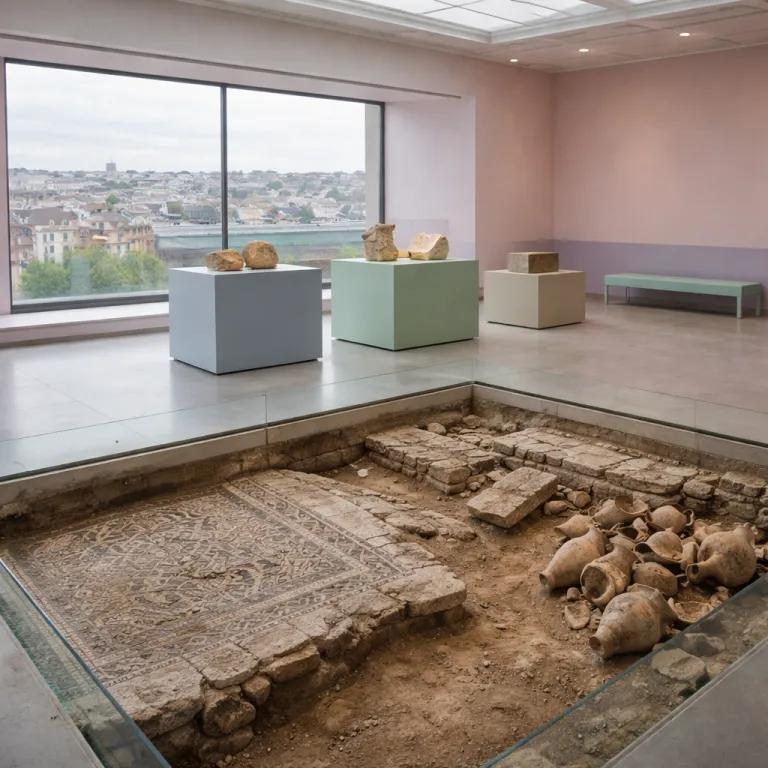
Burdigala Bordeaux Roman exhibition 2026 as a anchor for luxury stays
The burdigala bordeaux roman exhibition 2026 at the Musée d'Aquitaine is reshaping how luxury travelers read the city. At 20 cours Pasteur in central Bordeaux, this major exhibition uses newly unearthed artifacts and multimedia to show how the Roman settlement of Burdigala evolved into a thriving Atlantic port for trade across France and Europe. For guests booking premium rooms near the historic center, it turns a simple museum visit into a curated experience that connects suites, streets and centuries.
Curators position Burdigala as the missing chapter between the city’s Roman grid and the elegant façades that now frame Place de la Bourse and the Garonne riverfront. The exhibition explains how Roman engineers laid out the first roads toward Saint-Émilion and the Médoc, prefiguring the routes that later carried Bordeaux wine to Paris and beyond in Europe. Panels and models show how the ancient port, ancestor of today’s Port de la Lune UNESCO heritage site, handled amphorae of wine and other goods, anchoring the city’s golden age of maritime trade.
For travelers choosing a luxury hotel through stay-in-aquitaine.com, the burdigala bordeaux roman exhibition 2026 offers a precise cultural lens on where to stay and why. A suite overlooking the Garonne suddenly aligns with maps of the Roman harbor, while a room near the Grand Théâtre sits above streets that once followed Roman axes through the bordeaux historic core. This is not a generic history lesson ; it is a way to frame every walk, every photo and every glass of Bordeaux wine as part of a long Roman to contemporary continuum.
What Burdigala reveals about the Roman city behind today’s Bordeaux
The Musée d'Aquitaine, organizer of the burdigala bordeaux roman exhibition 2026, uses a mix of permanent exhibition spaces and temporary galleries to highlight recent archaeological finds. Visitors see fragments of villas, inscriptions and everyday objects that map a Roman city whose outline still shapes the modern place des Quinconces, the Grand Théâtre district and the streets leading to the Grosse Cloche. One display traces how the Roman cardo and decumanus evolved into the boulevards that structure the Bordeaux historic center, turning an abstract plan into a walkable itinerary.
Digital reconstructions overlay Roman Burdigala on today’s UNESCO listed urban fabric, showing how the port that became the Port de la Lune heritage site once handled wine shipments and long distance trade. Panels explain how the city’s prosperity funded public monuments, baths and early amphitheatres, precursors to later landmarks such as the Grand Théâtre and the luminous façades often called les quais des Lumières. For culturally minded travelers, this context transforms a simple walking tour into a layered experience where every place, from Place de la Bourse to the alleys behind the Grosse Cloche, carries visible traces of centuries of urban evolution.
Luxury guests can pair the exhibition with curated cultural excursions recommended in our guide to cultural excursions for discerning travelers in Aquitaine. A morning at the Musée d'Aquitaine followed by a private walking tour through the historic center allows travelers to match artifacts with street corners, façades and river views. The museum’s own guidance is clear for planning ; “What is Burdigala? Ancient Roman name for Bordeaux. Are there guided tours? Yes, guided tours are available. Is the exhibition suitable for children? Yes, with workshops for young audiences.”
Designing a half day Roman Bordeaux itinerary from your hotel
For guests staying in luxury properties near the Garonne, the burdigala bordeaux roman exhibition 2026 can anchor a half day itinerary that balances culture, wine and slow city time. Start with the Musée d'Aquitaine when it opens, checking the latest hours Bordeaux on the museum’s official channels before you leave your hotel. From there, a short walking tour leads through the bordeaux historic streets toward the Grosse Cloche, where the medieval gate stands on foundations that echo earlier Roman defenses and mark a place where centuries of urban life intersect.
Continue toward Place de la Bourse and the Port de la Lune riverfront, both part of the UNESCO heritage listing that protects the historic center as a major heritage site in France. Here, the exhibition’s explanations of Roman trade routes and amphorae of Bordeaux wine come alive in the reflections of the Miroir d’Eau, a photo friendly site that luxury travelers often cross en route to lunch. In the afternoon, a car service can take you to the Cité du Vin or out toward Saint-Émilion, where Roman era viticulture laid foundations for today’s grand cru experiences and where contemporary architecture meets centuries old landscapes.
Those building longer stays can weave in a visit to the former submarine base, now a contemporary art venue, to see how Bordeaux reuses its twentieth century infrastructure as creatively as it interprets its Roman past. Our guide to luxury cultural excursions in Aquitaine and our feature on premium wellness hotel stays in Aquitaine help you align spa time, vineyard visits and museum hours Bordeaux into one coherent itinerary. For travelers arriving from Paris or elsewhere in Europe, this approach turns a simple march through the city into a sequence of experiences where every site, from the Cité du Vin to Place des Quinconces, feels connected back to Burdigala and the golden age that the exhibition so carefully reconstructs.
Practical notes for luxury hotel guests planning their visit
The Musée d'Aquitaine sits within easy reach of many five star and premium hotels in the city, making the burdigala bordeaux roman exhibition 2026 an effortless addition to a high end itinerary. Guests can ask concierges to secure timed tickets, arrange private tours in English and coordinate transfers that link the museum with tastings of Bordeaux wine at urban cellars or nearby châteaux. For those balancing meetings and leisure, the exhibition’s central place allows a focused visit of one to two hours before or after business commitments.
High speed rail from Paris brings travelers directly into Bordeaux, where the tram network and taxis connect the station to the historic center and the Musée d'Aquitaine. Many visitors choose to stay near Place des Quinconces or the Grand Théâtre, areas that offer quick access to both the museum and the riverfront UNESCO heritage zone. From these hotels, it is simple to extend the Roman themed experience with a walking tour that links the museum, the Grosse Cloche, Place de la Bourse and the Port de la Lune embankments.
For guests continuing toward Saint-Émilion or other wine regions after their stay, the exhibition provides a clear narrative bridge between urban history and vineyard landscapes. Panels on Roman trade routes and amphorae help explain why this corner of France became a hub for wine, commerce and culture in Europe, long before the contemporary Cité du Vin or the luminous façades of les quais des Lumières existed. Taken together, the exhibition, the city’s heritage sites and the comfort of Aquitaine’s luxury hotels create a set of experiences that make Burdigala feel present in every stone, every glass and every carefully framed photo.
Trusted references
Bordeaux Tourism Office ; Musée d'Aquitaine official communications ; Ministère de la Culture heritage listings.