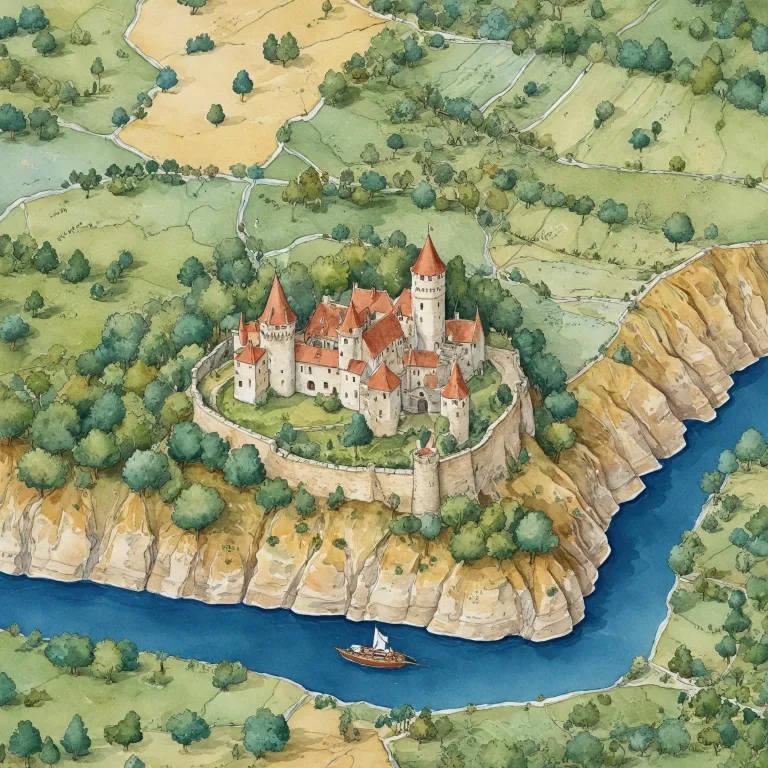
Reading a map of the Dordogne region for refined hotel planning
Understanding a detailed map of the Dordogne region is the first step toward planning a refined stay in this part of south west France. When you study a high quality Dordogne map, you immediately see how the Dordogne River shapes the landscape, the valleys, and the most prestigious hotel locations. This perspective helps you match each river valley and medieval town with the style of luxury or premium property that suits your travel expectations.
The department of Dordogne in Nouvelle Aquitaine corresponds largely to the historic Périgord region, which is divided into areas such as Périgord Noir and Périgord Pourpre. On any accurate map of Périgord, you will notice how the dordogne and Lot valleys concentrate many châteaux, Michelin starred restaurants, and secluded estates. This cartographic view is essential when you want a hotel that combines privacy, easy access to beautiful villages, and proximity to major prehistoric sites.
Luxury travelers often focus on the triangle formed by Sarlat la Canéda, Les Eyzies, and the Dordogne valley near Beynac and La Roque Gageac. A precise map of the Dordogne region shows how close these medieval villages are to the river Dordogne, yet each town offers a different atmosphere and level of exclusivity. By comparing several maps, you can decide whether to stay near a lively market town or in a more secluded valley with panoramic views over the dordogne river.
On a modern digital map Dordogne, layers allow you to highlight châteaux, Relais & Châteaux style properties, and spa resorts. This is particularly useful when you want to explore Dordogne while minimizing driving times between your hotel, a museum of prehistory, and gourmet restaurants. With a clear cartographic overview, you can align your chosen village or town with your preferred balance of culture, nature, and discreet luxury.
Mapping Sarlat, Périgueux, and the Dordogne valley for luxury bases
Choosing a base on a map of the Dordogne region requires comparing Sarlat, Périgueux, Bergerac, and smaller villages. Sarlat la Canéda appears at the heart of Périgord Noir on every detailed map Périgord, surrounded by some of the most beautiful villages France has to offer. Its dense medieval streets, golden stone façades, and lively markets make it ideal for travelers who want a premium hotel within walking distance of restaurants and cultural events.
Périgueux, the capital of Dordogne France, lies further north on the map along the Isle river, and it offers a more urban yet still intimate atmosphere. When you examine a Dordogne map, you see how Périgueux connects efficiently to other parts of Nouvelle Aquitaine, which can be helpful for multi stop itineraries. For guests who value easy access to administrative services, museums, and transport hubs, a luxury property near the historic Saint Front cathedral can be an elegant choice.
Bergerac appears on the map along the Dordogne river in Périgord Pourpre, surrounded by vineyards and riverside châteaux. This area suits travelers who want to visit Dordogne for wine tasting, river cruises, and relaxed countryside stays in premium hotels. When you compare the positions of Sarlat, Périgueux, and Bergerac on a map of Périgord, you can quickly see which town best matches your priorities for gastronomy, culture, or vineyard landscapes.
For inspiration beyond Aquitaine, many travelers consult a refined guide to luxury hotels in Provence, which illustrates how regional maps support high end hotel selection. Applying the same method to a map of the Dordogne region helps you identify where the most exclusive river view suites and château hotels cluster. By overlaying points of interest such as prehistoric sites, medieval châteaux, and gourmet restaurants, you can narrow your search to a few strategic villages and towns.
Using the map to navigate prehistoric and medieval heritage from luxury hotels
The Dordogne region is renowned for its prehistoric and medieval heritage, which appears clearly when you analyze a detailed map Dordogne. Along the Vézère valley near Les Eyzies, you will find a dense concentration of prehistoric sites, Cro Magnon shelters, and the famous Lascaux area. A precise map of the Dordogne region allows you to position your hotel so that early morning or late evening visits remain comfortable and unhurried.
Les Eyzies, often called the world capital of prehistory, stands out on any map Périgord as a strategic base for culture focused travel. Here, the museum of prehistory and nearby Cro Magnon sites can be reached within minutes from several discreet luxury guesthouses and riverside properties. When you explore Dordogne with a focus on archaeology, choosing accommodation within this compact valley reduces driving and enhances the overall sense of immersion.
Further south, the Dordogne valley displays a chain of medieval châteaux and fortified villages that line the river Dordogne. On a high resolution Dordogne map, you can trace the route between Beynac, Castelnaud, La Roque Gageac, and Domme, all of which offer panoramic views over the valley. Staying in a château style hotel or a premium riverside property here allows you to experience the medieval atmosphere while enjoying modern comforts and attentive service.
For travelers comparing regions, a refined guide to exceptional hotels in Champagne France for discerning travelers shows how heritage landscapes pair with luxury stays. Applying this perspective to a map of the Dordogne region helps you balance visits to prehistoric sites with time in medieval towns and peaceful countryside. By marking each museum, chateau, and valley viewpoint on your map, you can design a route that feels both culturally rich and logistically effortless.
Locating rivers, valleys, and beautiful villages for premium stays
Rivers and valleys structure the entire Dordogne France landscape, and a good map of the Dordogne region makes this immediately visible. The Dordogne river and the Lot river carve deep valleys lined with cliffs, walnut groves, and terraced vineyards, creating natural amphitheatres for luxury hotels. When you study a map Dordogne with contour lines, you can identify elevated villages and châteaux that offer sweeping views over the dordogne valley.
Many of the most beautiful villages France promotes officially are located along the river Dordogne or its tributaries. Places such as La Roque Gageac, Domme, and Saint Cyprien appear close together on a detailed map Périgord Noir, yet each village has a distinct character. Selecting a hotel in or near these villages allows you to enjoy riverside walks, gourmet dinners, and easy access to boat trips without long transfers.
Saint Pierre churches often mark the historic heart of many villages, and they can serve as useful landmarks when reading a printed or digital map. In several towns, the church of Saint Pierre stands near central squares where premium hotels and refined guesthouses cluster. By identifying these focal points on your Dordogne map, you can ensure that your chosen property sits within an elegant, walkable environment.
When planning a longer visit Dordogne, some travelers combine stays in the Dordogne valley with nights near the Lot valley for variety. A comprehensive map of the Dordogne region helps you visualize driving times between these valleys, nearby prehistoric sites, and key market towns. This cartographic approach supports a balanced itinerary that alternates riverside relaxation, village exploration, and cultural excursions from carefully selected luxury bases.
Aligning luxury hotel choices with regional maps and travel logistics
For guests booking premium hotels in Nouvelle Aquitaine, a map of the Dordogne region is as important as any photo gallery. By overlaying your preferred villages France with transport routes, you can ensure that arrival and departure remain smooth and stress free. This is especially relevant if you plan to travel by train to Périgueux or Bergerac, then continue by car to a secluded château or riverside estate.
When you explore Dordogne on a multi stop journey, distances on the map can be deceptive because of winding valley roads. Carefully reading a map Dordogne with scale and elevation helps you avoid underestimating travel times between Sarlat la Canéda, Les Eyzies, and the dordogne valley. This attention to logistics allows you to schedule spa appointments, restaurant reservations, and private guided tours without rushing.
Many luxury travelers consult a detailed travel guide before confirming reservations, then cross check recommendations against a high resolution map Périgord. This method ensures that a hotel marketed as riverside truly sits near the dordogne river, and that views advertised as valley panoramas correspond to reality. It also helps you verify proximity to key attractions such as a museum of prehistory, medieval châteaux, or renowned gastronomic addresses.
For those comparing budgets across regions, an analysis of Aquitaine 5 star hotel prices for luxury stays in Nouvelle Aquitaine provides useful benchmarks. Combining this financial perspective with a map of the Dordogne region allows you to weigh room rates against location advantages, such as direct river access or walking distance to a historic town. In practice, the most satisfying stays often result from aligning cartographic insight, realistic travel times, and a clear sense of the atmosphere you seek.
Designing themed itineraries on the map for high end Dordogne stays
Once you are familiar with a detailed map of the Dordogne region, you can design themed itineraries that match your interests and hotel style. A heritage focused route might link Sarlat la Canéda, Les Eyzies, and the Vézère valley, emphasizing prehistoric sites and medieval streets. On your Dordogne map, you would highlight Cro Magnon shelters, the museum of prehistory, and fortified villages, then select premium hotels within short driving distance.
A river and valley themed itinerary would follow the course of the river Dordogne from Argentat toward Bergerac, tracing the most scenic stretches. Here, a map Dordogne helps you locate châteaux perched above the dordogne valley, where many luxury properties offer suites with panoramic terraces. You can plan boat trips, riverside walks, and wine tastings, returning each evening to a hotel that reflects the calm rhythm of the valley.
For travelers interested in wine and gastronomy, a map Périgord reveals how Bergerac and its surroundings connect to vineyards and gourmet addresses. By marking villages France known for markets and truffle fairs, you can align your visit Dordogne with seasonal culinary events. Premium hotels in these areas often collaborate with local producers, offering tastings and private visits that enrich your travel experience.
Some guests prefer a spiritual or architectural theme, focusing on churches dedicated to Saint Pierre and other saints across the region. On a map of Périgord, these religious landmarks form a subtle network linking towns, valleys, and hilltop sites with contemplative atmospheres. By pairing this network with carefully chosen luxury hotels, you create a journey that balances cultural depth, scenic beauty, and the quiet comfort expected from high end hospitality.
Key statistics about the Dordogne department
- Area of the Dordogne department : 9 060 km², offering extensive rural landscapes and varied hotel locations.
- Population of Dordogne : approximately 412 807 inhabitants, ensuring a balance between lively towns and tranquil countryside.
- Number of communes : 503, providing a wide choice of villages and towns for different travel styles.
- Estimated number of castles and châteaux : around 1 500, many of which influence luxury hotel settings and views.
Questions travelers often ask about the Dordogne region
What is the capital of the Dordogne department ?
The capital of the Dordogne department is Périgueux, which appears clearly on any reliable map of the Dordogne region. This town in Nouvelle Aquitaine serves as an administrative and cultural hub, with a historic center dominated by the cathedral of Saint Front. For luxury travelers, Périgueux can be a convenient starting point before moving toward the Dordogne valley, Sarlat, or Bergerac.
What are the main attractions in the Dordogne ?
Main attractions include the medieval town of Sarlat la Canéda, the Lascaux caves, and numerous castles such as Château de Beynac. On a detailed Dordogne map, these sites cluster mainly in Périgord Noir and along the river Dordogne, which helps travelers plan efficient routes. Many premium hotels position themselves near these highlights, allowing guests to combine cultural visits with refined comfort.
What is the climate like in the Dordogne ?
The Dordogne has a temperate climate with mild winters and warm summers, making it favorable for agriculture and tourism. When reading a map of the Dordogne region, this climate explains the presence of vineyards near Bergerac, walnut groves in the valleys, and lush forests across Périgord. For hotel guests, this generally gentle weather supports outdoor pools, terraces, and open air dining for much of the year.