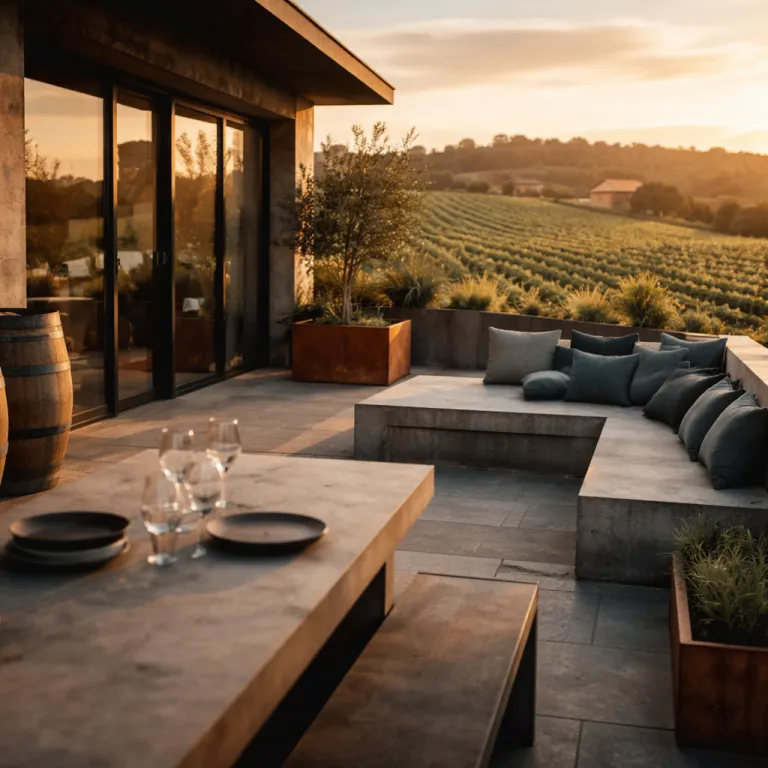
Quiet luxury hotels in France and why Aquitaine leads the movement
Quiet luxury hotels in France are not defined by marble lobbies or logoed cushions. They are defined by the way a hotel room absorbs the sound of the gravel drive, by how the staff know when to appear and when to vanish. In Aquitaine, this philosophy turns a simple stay into a perfectly tuned conversation between heritage, terroir and time.
Across France, more than 500 luxury hotels operate, yet only a fraction genuinely embrace quiet hotels as a guiding principle rather than a marketing line. According to Atout France’s latest accommodation overview, the country counts just over 520 five-star properties, but only a small share are truly rural or vineyard-based retreats. The most interesting addresses in Aquitaine sit in former chartreuses, bastides or maisons de maître, where the architecture was never meant to shout and still refuses to behave like a typical Paris hotel with a chandeliered lobby. When you book one of these hotels, you are not reserving just rooms; you are reserving a way of life that the capital’s grand boulevards largely forgot.
The global trend is clear enough that even large groups now talk about quiet luxury hotels France as a strategic priority. A 2023 report by the World Travel & Tourism Council describes “high-end properties in peaceful, nature-focused settings” as the new benchmark for high-spending travelers, and Aquitaine’s hoteliers have been doing exactly that for decades. They understood early that a perfect location is not a busy street near the Eiffel Tower but a gravel lane between vines, with easy access to a village square and a market at walking distance.
Look at properties such as Les Sources de Caudalie near Bordeaux or Château des Vigiers in the Dordogne, both often cited when travelers search for quiet hotels in France. These are firmly rooted in Aquitaine and illustrate the regional shift toward hotel spa concepts where the steam room is tucked behind a garden, not under a neon sign. Owners here restored cloisters, re-opened cellars and let the vines, not the architect, set the tone, creating retreats that feel more like private estates than conventional resorts.
The result is a new generation of Aquitaine hotels that feel closer to a private monastery or a secluded vineyard villa than to any central Paris address. You will not find a glowing Latin Quarter neon sign or a themed bar, but you will find a stone terrace with a balcony view over Cabernet Franc rows. For travelers used to Paris-style hotels, where the location pitch is all about being near Notre-Dame or Saint-Germain-des-Prés, this quieter rhythm can feel radical.
On stay-in-aquitaine.com, we see executives who usually stayed hotel after hotel in the business districts of Paris well beyond the périphérique now asking for quiet hotels that feel like private homes. They still expect excellent service standards, from precise breakfast timing to a responsive équipe at reception. What they no longer want is the generic international template that could be in any quarter of any capital, whether a Left Bank side street or a boulevard near a convention center.
Charming châteaux in Aquitaine where heritage replaces spectacle
The most compelling quiet luxury hotels France has to offer in Aquitaine are its charming châteaux, where restoration has replaced new construction as the default strategy. Heritage buildings here were never meant to compete with a Paris hotel façade or a hotel spa tower; they were working estates, with cellars, dovecotes and long views over vines or rivers. When these properties become hotels, the best owners resist the urge to turn them into stage sets.
Step into a château near Saint-Émilion and you immediately feel how different this is from the city hotels Paris travelers know well. Instead of a lobby on a busy street, you cross a gravel courtyard where the only sound is the wind in the plane trees, and the staff greet you as if you had stayed on the estate for years. The rooms are large but not ostentatious, with thick walls that keep them quiet in summer and a balcony view, when there is one, that frames vines rather than rooftops.
In this context, the word location takes on a different meaning than in a glossy Paris brochure. Here, a perfect location hotel is one that sits within easy access of a bastide town, a river for kayaking and a serious wine appellation, not one that promises walking distance to Notre-Dame or the Eiffel Tower. Guests who once measured their day by how quickly they could reach Saint-Germain or the Latin Quarter now measure it by how slowly they can move between cellar, pool and library.
Quiet luxury hotels France wide are increasingly integrating wellness, and Aquitaine’s châteaux are no exception. Many now include a discreet hotel spa wing, sometimes with a steam room carved into old stone vaults, where the atmosphere is more monastic than flashy. You wake to a breakfast served in a former orangerie, with the same friendly équipe who poured your wine the previous evening, and the rhythm of the stay feels closer to a private house party than to a grand address in central Paris.
For travelers mapping their route through the region, an elegant overview of the Dordogne and its river valleys is essential, and resources such as this luxury-focused Dordogne region guide help anchor choices. Once you understand how the Vézère, Dordogne and Lot rivers shape the landscape, choosing between different quiet hotels becomes a question of which valley you want to wake up to. That is a more meaningful decision than whether your Paris hotel is in the historic Latin Quarter or a few streets away.
What unites these Aquitaine châteaux is a refusal to behave like a concept-driven property. There is no attempt to recreate a Left Bank jazz bar or a Saint-Germain café on site, because the terroir already provides the narrative. Instead, owners focus on the details that matter in quiet hotels: the way the room smells of beeswax and stone, the way the staff remember your preferred breakfast, the way the day stretches without a single scheduled activity.
Terroir-driven hospitality versus international brand standards
Quiet luxury hotels France wide are now navigating a tension between international brand standards and terroir-driven hospitality, and Aquitaine sits at the sharpest edge of that debate. Global chains know how to run an excellent hotel operation, with consistent rooms, predictable breakfast and easy access to loyalty points. Yet the very systems that make a Paris hotel efficient can flatten the character that makes a château near Saint-Émilion unforgettable.
Consider a property like Château Grand Barrail near Saint-Émilion, which has become a reference point for travelers seeking an elegant château stay rather than a standard city experience. Here, the location hotel advantage is not proximity to a metro line or walking distance to a business quarter, but the fact that you can step from your room directly into rows of vines. The staff are trained to five-star standards, yet they speak as comfortably about soil types as about spa treatments, and that dual fluency is what modern travelers now expect.
Executives who have spent years in hotels Paris wide, shuttling between meetings near Notre-Dame and dinners in Saint-Germain, arrive in Aquitaine with finely tuned service expectations. They are used to a capital hotel where the steam room is open late, the balcony view frames the Eiffel Tower and the concierge can secure a table in any Latin Quarter restaurant. What surprises them in a charming château is that the greatest luxury is often the quiet itself, the way the day slows down without sacrificing precision.
Terroir-driven hospitality means that the hotel spa menu might reference local grape varieties, that the breakfast pastries come from a baker in the nearest village rather than a central supplier, and that the rooms are arranged to catch the evening light over the vines. It also means accepting that some aspects of the stay will feel less standardized than in a polished address in the 6th arrondissement. For many guests, that trade-off is not a compromise but the point.
When travelers book quiet hotels in Aquitaine through stay-in-aquitaine.com, they are often explicit about wanting to avoid anything that feels like a generic Paris hotel. They ask whether the location offers easy access to vineyards rather than to the Latin Quarter, whether the street outside is a country lane rather than a boulevard and whether the staff can arrange cellar visits instead of museum tickets. The answer, in the best properties, is always yes.
This is where Aquitaine’s châteaux quietly outperform many hotels the capital can offer to the same clientele. They deliver the same level of comfort in the room, the same attention to breakfast timing and the same professional yet friendly service, but they root every gesture in place. For travelers who once stayed hotel after hotel near the historic heart of Paris well into their careers, this shift toward terroir is not a downgrade; it is an upgrade in meaning.
Design language, daily rhythm and how to choose your château stay
The design language of quiet luxury hotels France travelers now seek in Aquitaine is almost the opposite of what you find in a typical Paris hotel. Signage is discreet, materials are local, and the most photogenic corner of the hotel is often a stone staircase rather than a rooftop bar with an Eiffel Tower balcony view. This restraint is not shyness; it is a deliberate choice to let the building and the landscape speak first.
Inside the rooms, you notice the difference in how space is used compared with the compact hotels Paris visitors know well. There is less emphasis on a theatrical lobby and more on generous bathrooms, deep mattresses and windows that open onto vines, rivers or courtyards, ensuring the room stays naturally quiet. The staff focus on intuitive service, appearing with a tray of tea at the right moment rather than reciting a script about the Latin Quarter or Saint-Germain.
The daily rhythm in these châteaux is also distinct from the pace of a tightly scheduled city itinerary. Your day might start with breakfast on a terrace, continue with a walk through the vines, a session in a small steam room carved into stone and a cellar dinner with the winemaker, all within walking distance of your room. There is no need to cross a busy street or navigate a quarter filled with traffic, and that sense of containment is part of the appeal.
For travelers comparing options, one useful framework is to think in terms of how much structure you want in your stay. If you are used to Paris hotels where the concierge maps out every hour between Notre-Dame, the Latin Quarter and Saint-Germain, a château in Aquitaine will feel looser, with more unscheduled time. That freedom can be unsettling on the first day, but by the second or third, most guests describe it as the perfect reset.
When choosing among quiet hotels in Aquitaine, pay attention to three elements: the location hotel context, the scale of the property and the personality of the équipe. A château near the coast, perhaps within reach of refined stays by the Atlantic dunes such as those highlighted in this guide to elegant Atlantic-side retreats, will offer a different atmosphere from one deep in the Dordogne. Both can deliver quiet luxury, but the light, the food and the day’s rhythm will be distinct.
Finally, remember that quiet luxury hotels France wide, and especially in Aquitaine, succeed because they refuse to imitate a Paris hotel, even when guests arrive with that benchmark in mind. They do not recreate a Latin Quarter bar or a hotel spa with skyline views; instead, they offer a library with creaking floors, a breakfast room that smells of coffee and stone, and a staff who know the names of the vines outside your window. If you value that kind of depth, then booking a charming château here will feel less like choosing a hotel and more like choosing a way to travel.
Key figures shaping quiet luxury hotel stays in France
- France counts around 500 recognized luxury hotels, and only a subset operate as genuinely quiet hotels focused on peaceful settings rather than urban spectacle, according to aggregated figures from Atout France and the French Tourism Board’s latest classification data.
- The average occupancy rate for the country’s luxury segment hovers around 75 percent, a level that indicates sustained demand for high-end stays even outside traditional Paris hotel markets such as the areas around Notre-Dame and Saint-Germain.
- Recent analyses by hospitality consultancies such as MKG Consulting and Horwath HTL note increased demand for intimate luxury properties and a strong integration of wellness facilities such as hotel spa areas and steam room suites, trends that align closely with Aquitaine’s château conversions.
- Travel advisors interviewed by stay-in-aquitaine.com report that travelers seeking quiet luxury hotels France wide now prioritize heritage restoration over new construction, a shift that directly benefits Aquitaine’s stock of bastides, chartreuses and maisons de maître.